Album: Review: U2 Best of 1990-2000 & B-sides
by Matt Anderson
In the 1990s, U2 received knocks for creating "car crash music" with Achtung Baby and Zooropa and they were lambasted for dabbling in techno with POP. Through it all, though, the experimentation U2 endured in the last decade of the 20th century secured their position as the most innovative band to hit the airwaves since The Beatles.
This was the decade in which the band known for wearing its charitable heart on its sleeve complicated things for the mainstream as Bono took on the alter egos of The Fly, The Mirrorball Man, and Mr. MacPhisto. ZOO TV started the charge with the proclamation "Everything you know is wrong" and Popmart put video game heroine Lara Croft on the big screen before Hollywood could get its hands on her.
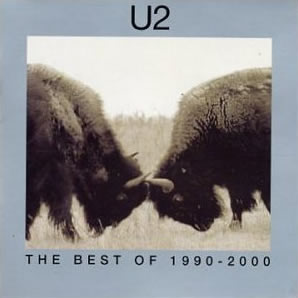
Now, to commemorate that fantastically wild period, U2’s Best of 1990-2000 recaps this decade of reinvention and blind ambition. With this compilation, those who thought the band were "unproductive" and on the verge of irrelevance in the ‘90s will have plenty to mull over.
The biggest surprise is to discover how much had to be left off the limited edition set that includes two packed-to-the-brim CDs and a bonus four-track DVD.
Therefore, the best place to start is with what’s not there.
Classic tracks and fan favorites missing from the "best of" CD include Ultraviolet (Light My Way), The Fly (which does appear on the UK edition of the disc), Lemon (making an appearance on the B-sides disc with the funky Jeep Mix), The Wanderer (with lead vocals by Johnny Cash), Please (tacked on as a live track on the supplemental DVD), Last Night on Earth, and The Ground Beneath Her Feet (with lyrics by Salman Rushdie). At least Elevation and Walk On can be excused since the singles were released in 2001.
No-shows on the B-Sides disc are treasures such as Slow Dancing (with lead vocals by Willie Nelson), Big Girls are Best, and Two Shots of Happy, One Shot of Sad.
Throw in the bandmates’ miscellaneous projects, as writers, solo artists, or otherwise, including work on films such as Mission: Impossible, Goldeneye, and In the Name of the Father, and the past decade as a whole becomes nothing short of a sonic masterpiece.
Having said all that, what has found its way on this "best of" set makes for a fine Cliff Notes edition of U2 in the ‘90s. Naturally, the global hits, such as One, Mysterious Ways, and Beautiful Day, are represented. But so are some interesting, less mainstream tracks like Miss Sarajevo and The First Time.
Of particular interest to long-time fans are the new mixes of four tracks. On Gone, aside from the reduction in background effects, Larry’s drums are crisper and Bono’s vocals more closely match his live performance of the song. Staring at the Sun offers more subtle changes and simply sounds better with Bono, Larry, The Edge, and Adam playing together as a team rather than competing for airspace. The more dramatic retoolings, however, are with Discotheque and Numb, both throbbing with a sense of newfound vigor.
Some critics have accused the band of trying to create a revisionist version of their own past, but the lyrics haven’t changed. Many critics and fans alike dismissed Pop as a shallow effort - a closer listen to its three overhauled tracks, featuring a stripped-down sound, proves the beloved heartfelt essence of the band was always there with Bono still writing meaty songs of heartache and hope. It’s just the scenery that had changed; instead of a bar, it was a disco.
The set also features two brand new tunes, The Hands that Built America and Electrical Storm. Both songs are solid additions that fit in well with their surroundings. Most notably, Hands would go on to win the Golden Globe for "Best Song from a Motion Picture" at the 60th annual Golden Globe awards in Los Angeles on January 19th, 2003.
If there is a weakness in the set, it’s the fact that five tracks on the B-Sides are different mixes (primarily club versions) of songs on the "Best Of" disc.
In particular, the B-Side mix of Electrical Storm seems a bit gratuitous; the more polished William Orbit mix on the "Best Of" disc is by far the better of the two. Orbit’s mix is slower, more fluid and more seductive, in comparison to the rather aggressive B-side version that also features some jolting and choppy transitions between verses. Considering this, a more compelling addition would have been the acoustic versions of Staring at the Sun or Stuck in a Moment You Can’t Get Out Of, which offer dramatic demonstrations of how U2 songs can pack a different kind of punch whether they’re amped up with effects or stripped down to the basics.
The release of U2’s second best-of collection comes at a time when the band’s relevance and popularity are at new heights.
The British music magazine Q named Bono the most powerful person in music, based on the strengths of his multi-tasking global activism, in its November 2002 issue. That same issue featuring a cover story on "10 years of turmoil inside U2."
At the same time, NME’s special edition of NME Originals: U2 celebrated the band’s first 20 years with the cover headline, "Revelation! From a small ad in NME to global domination… how four young Dubliners became the world’s best loved band."
As a high-level review of 10 turbulent years that brought U2 to where they are today, The Best of 1990-2000 & B-Sides valiantly undertakes a rather daunting task. Here’s to dreaming it all up again in 2000-2010.
The Best of 1990-2000: 10/10.
The B-Sides: 8/10
Overall: 9/10
• Originally published at Interference.com.
Contact 
Write Matt
Visit the Speakers Corner
Subscribe to Mattopia Times
Support 
Help Matt live like a rock star. Support MATTAID.
It's a crazy world and it's only getting crazier. Support human rights.
Search 
The Mattsonian Archives house more than 1,800 pages and 1.6 million words. Start digging.